

Case Study · Metalworking industry · Partner: UltraPras
Real-time monitoring of UltraPras hydraulic presses
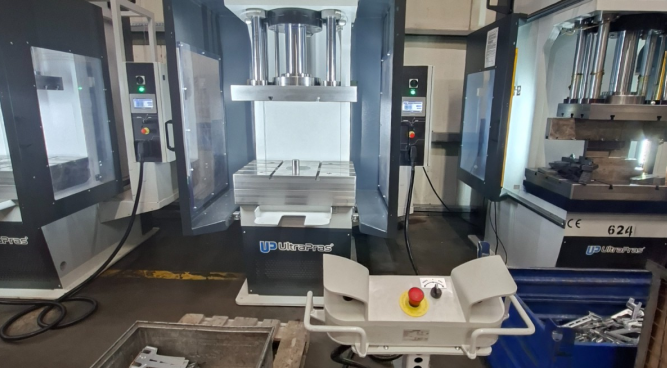
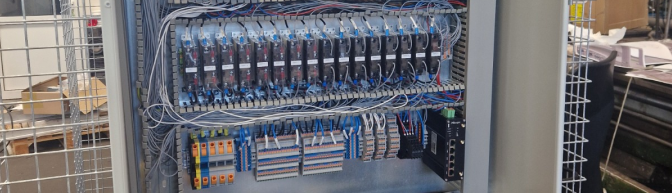
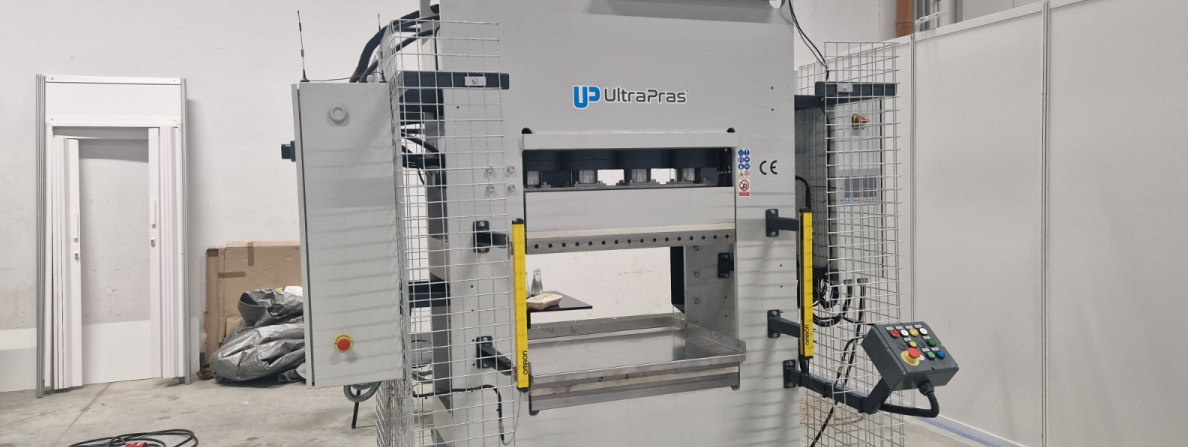
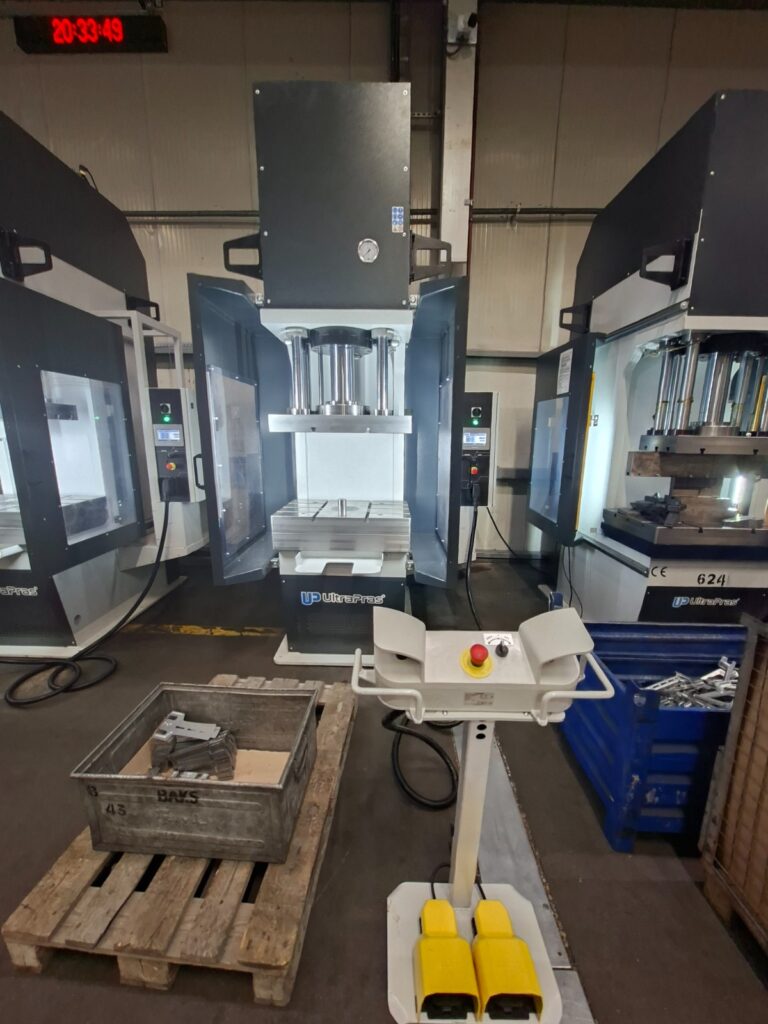
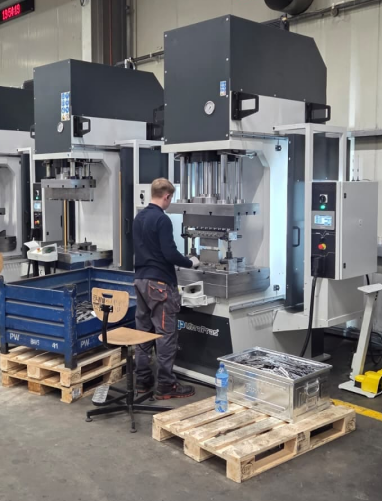
ITS connected to five UltraPras hydraulic presses with a capacity of up to 160 tonnes — operating pressure, installed tool, operator, unit cycle time and production count are collected automatically by ITS Edge Box in an ITS Edge Cabinet.
Press operation without a digital record
The hydraulic press fleet operated without a central system collecting cycle, load or operator-assignment data. Information about actual machine performance was not recorded in one place.
No data on actual machine operation
- Cycle and production counts were not recorded in a digital system.
- The actual operating time of each press during a shift was unknown.
- Production data was not linked to a specific operator or tool.
- Machine-fleet utilisation decisions were made without reliable operating data.
ITS providing a clear view of press operation
- Pressure, tool, operator, cycle time and production count are collected automatically.
- The dashboard presents operating time by shift and by day for each machine.
- Cycle history is available for further analysis without manual records.
- One system covering all five presses in the hall.
Monitoring architecture — from the press to the dashboard
Each UltraPras press provides operating data to an ITS Edge Box installed in an ITS Edge Cabinet, where the data is aggregated and processed locally in the production hall.
Each UltraPras press provides operating pressure, installed tool, operator, unit cycle time and completed-cycle data to an ITS Edge Box installed in an ITS Edge Cabinet. The data is processed locally and presented in the dashboard module as operating time by shift and by day.
Hydraulic presses up to 160 tonnes
Machines covered by monitoring in this deployment.
Manufacturer websiteITS Edge Box
An industrial edge computer running the ITS platform for local data acquisition and processing.
ITS Edge Cabinet
A prefabricated cabinet prepared for installing ITS infrastructure next to a machine.

Machine-fleet operation visible in one place
Instead of fragmented and incomplete information about press operation, the production team now has one consistent view of all five machines.
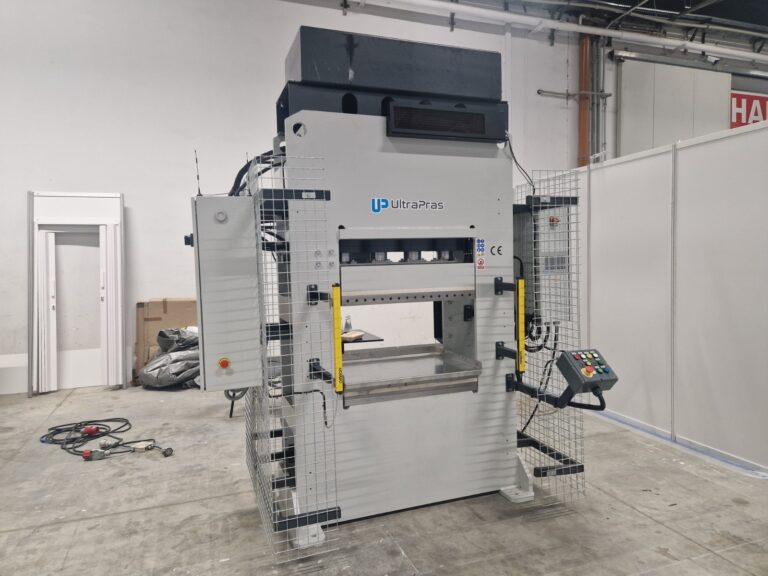
Implementation photos
ITS is the starting point, not the endpoint
Data collected by ITS does not have to remain in one system. Depending on the agreed integration scope, the platform can forward it to tools already used at the plant or elsewhere in the organisation.
The systems shown are examples. ITS can also be integrated with selected third-party systems, subject to the client’s IT environment and the agreed project scope.
Do you operate machines without a digital view of their performance?
Let’s discuss which machine data you need and how it can be connected to ITS.
Schedule a consultationDescribe the machines and the required operating data.
For an initial discussion, the number and types of machines, available signals, expected reporting frequency and the intended users of the data are sufficient.